Why the name captivates
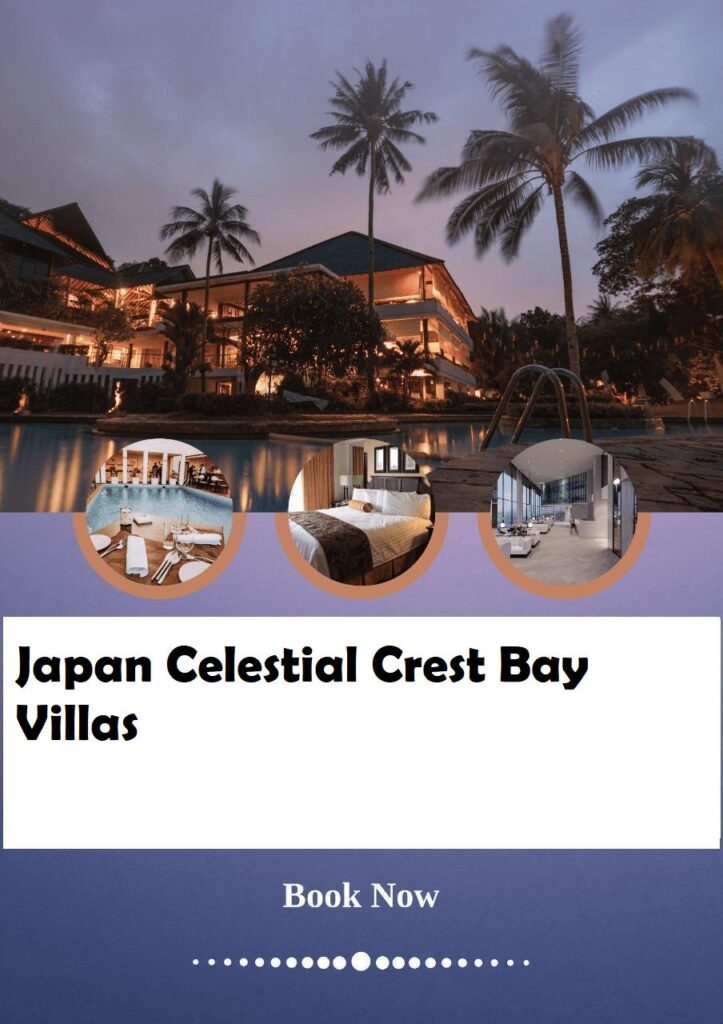
“Japan Celestial Crest Bay Villas” promises a meeting point of sky, ridge, and sea—the soft hush of a sheltered cove paired with the quiet ceremony of Japanese hospitality. The name alone evokes pale-blue mornings on a brushstroke horizon, lantern-lit evenings where constellations feel close enough to cup in your hands, and the comforting geometry of shoji, cedar, and stone. Here, days unfold deliberately: steam rising from a hinoki tub, a tray of seasonal sweets arriving with the gentleness of a bow, and the bay turning from silver to sapphirine as if obeying a private script. You come for the view, you stay for the rituals; you leave with a map of calm you can carry anywhere.
Signature themes
Celestial — stargazing rituals above the waterline
Night is a headline act. Each villa is oriented to give the sky pride of place: wide eaves frame Orion in winter and the Summer Triangle in July, while discreet rooftop decks host guided star sessions with warm yukata robes, low lanterns, and yuzu tea. Soft, reversible blankets and a little notebook at the telescope invite you to sketch your favorite constellation—a quiet souvenir made by hand and moonlight.
Crest — hillside vantage and horizon pools
Perched along the ridge, the Crest villas lift you just high enough to watch fishing boats draw calligraphy on the bay. Infinity-edge plunge pools blur water with water; when early sun warms the stone, you’ll swear the pool is a lens focused on the tide. Interiors lean minimal—tatami underfoot, a single ikebana stem whispering of the season, and sliding doors that open to a terrace where breakfast is served to the rhythm of gulls.
Bay — water-level pavilions and tide whispers
At the shoreline, Bay villas bring you nose-to-nose with the tide. Wake to the soft clink of halyards, take tea on a weathered deck, and let your day pace itself to the tide chart placed beside your bed. At low tide, staff can lead a tide-pool ramble with tiny nets and magnifying jars; at high tide, the cove mirrors clouds so cleanly that even the quiet feels polished.
Villas — private onsen, slow craft, and discreet service
Each villa is its own small world. Private onsen tubs draw mineral-rich water into hinoki baths; a “slow craft” tray arrives daily—washi paper, calligraphy brushes, or a knot-tying kit—to honor Japan’s love of refined making. Service is present but never pushy: slippers turned toward the door, tea refreshed before you ask, a handwritten weather note tucked into your breakfast napkin.
Life at the villas
Cuisine follows a sea-to-season rhythm. A kaiseki dinner might move from translucent sashimi to charcoal-kissed fish, then to a comforting clay-pot rice bright with sansho. Breakfast is unrushed: miso soup, pickles, grilled fish, and a delicate omelet, or a Western plate with a Japanese wink—yuzu marmalade, soba-flour pancakes, mountain butter.
Wellness favors quiet clarity. Mornings open with guided breathing on the terrace, afternoons offer forest-edge walks under cedar and pine, and evenings close with onsen soaks scented by hinoki resin. Couples may book a “sound bath and tea” ritual—singing bowls, then whisked matcha—designed to land your day like a paper crane on still water.
Excursions can be simple and perfect: a skiff to a nearby islet for a barefoot picnic, a pottery studio visit to throw your own tea cup, or a bicycle loop through fishing hamlets where blue noren curtains lift in the breeze.
Q&A
Where is it exactly?
Set along a quiet Japanese bay (the location kept discreet to preserve privacy), the property is easily reached by rail-and-car from major hubs. Think pine-clad ridges, low villages, and water as calm as lacquer.
When is the best time to visit?
Year-round works. Spring brings plum and cherry, summer offers sea breezes and luminous nights, autumn paints the slopes in rust and ember, and winter delivers the clearest stars and the coziest soaks.
How many nights should I plan?
Two nights reset you; three to four let you unfurl—one day for tide and onsen, one for craft and cuisine, one for a boat trip and a nap you’ll remember forever.
Is it suitable for families or only couples?
Both. Interconnecting villas and tide-pool activities serve families, while private decks, silent star sessions, and in-villa dining flatter romance.
What style of service should I expect?
Warm, precise, and almost telepathic—amenities appear exactly when you need them, with the humility and care that make Japanese hospitality legendary.
Any recommended alternatives if dates are full?
- Hoshinoya Tokyo (Tokyo): Contemporary ryokan spirit with cocooning tatami rooms and meditative design.
- Amanemu (Ise-Shima): Bay views, mineral hot springs, and elegant, wood-rich suites made for lingering.
- Gora Kadan (Hakone): Heritage ryokan refinement at the foot of the mountains, with immaculate kaiseki.
- The Ritz-Carlton, Kyoto (Kyoto): Riverside serenity and refined dining steps from the city’s cultural core.
- Benesse House (Naoshima): Art-infused island living where galleries and sea light meet.
Conclusion — the quiet grammar of exclusivity
Japan Celestial Crest Bay Villas trades fireworks for finesse: a dawn swim where the pool and bay are the same sentence; breakfast arriving like a haiku; a night sky that seems closer because everything else is simpler. You don’t just sleep by the water—you learn its punctuation. Each villa writes a chapter in cedar and tide, and together they compose an elegant manual for modern stillness. Come for the view between crest and bay; leave with a quieter way to see the world.