Tucked behind ancient stone walls and the whispering cypress of the Oltrarno, Florence Boboli Gardens Luxury Hotel feels like a secret that only the city’s most discerning travelers know. Here, the drama of Renaissance Florence unfolds not on crowded streets but in a landscape of terraces, grottoes, and sculpted greenery. The hotel borrows the Boboli’s sense of theater—grand perspectives, hidden passages, and sunlit lawns—and translates it into an intimate, modern sanctuary. From the first step through its courtyard, you sense a promise: privacy without isolation, heritage without heaviness, and luxury that is felt, not flaunted.
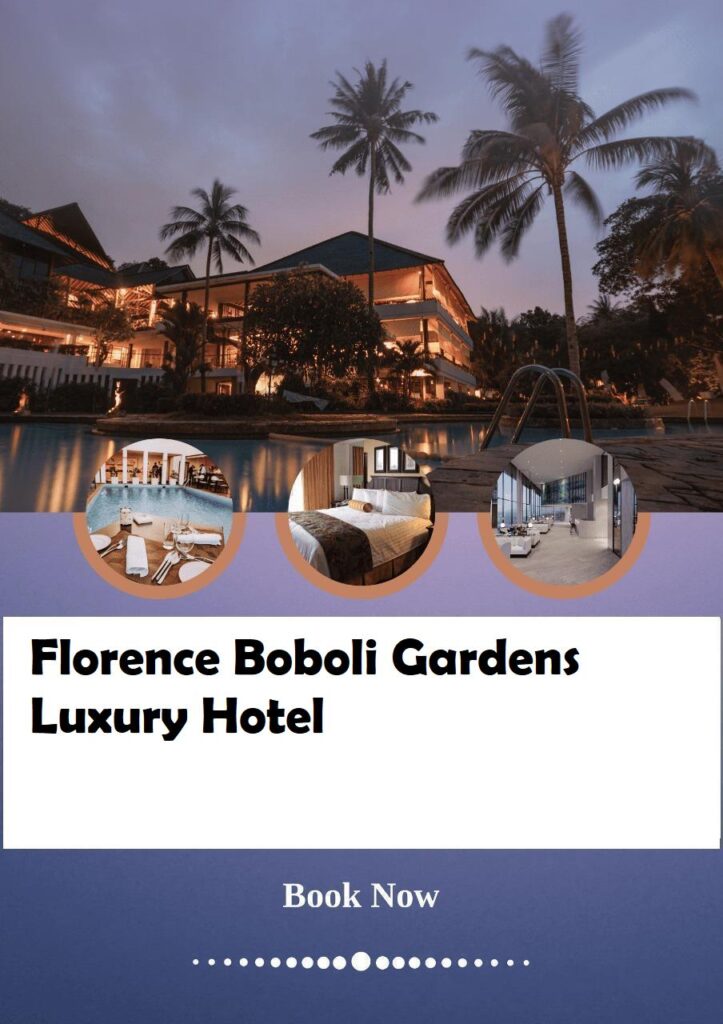
Setting & First Impressions
Arrivals begin in a lemon-scented cortile where terracotta pots line sandstone arcades. Light filters through climbing vines, and the hush feels deliberate—a counterpoint to the bustle across the river. Bell staff glide rather than walk; check-in happens on a velvet settee with a Tuscan sparkling aperitivo. The lobby’s palette—sage, cream, and oxidized bronze—mirrors the gardens beyond, with contemporary artworks punctuating fragments of original stone.
Suites with a Garden Soul
Guest rooms are composed like small galleries. Handloomed textiles soften pietra serena floors; custom headboards echo the curve of Florentine arches; and every suite frames a vignette of green—boxwood parterres, an alley of yews, or the city’s rooftops dissolving into the hills. Signature Garden Pavilion Suites open to private lawns for barefoot mornings and dusk picnics; Medici Terrace Suites pair freestanding marble tubs with sunset-facing loggias. Technology hides in plain sight: one-touch lighting scenes (Vasari, Noon, Twilight), silent climate control, and a scent program blending bergamot, cypress, and iris—the flower of Florence.
Dining, from Orto to Opera
Cuisine is a celebration of produce and restraint. At Orto al Tavolo, the chef composes menus that shift with the kitchen garden: spring peas with buffalo ricotta and lemon oil; summer tomatoes layered with anchovy and wild oregano; autumn porcini brushed with Vin Santo. The tasting menu, Percorso Boboli, is an edible promenade—light, green, then deep and woodsy. Evenings begin on the Grotto Bar terrace where cocktails riff on Tuscan botanicals; a favorite is the Iris Negroni, perfumed with violet. Breakfast is unhurried: honeycomb on the frame, cornetti a mandorla still warm, and eggs folded with pecorino and black truffle.
Wellness & Uncommon Experiences
The spa takes cues from Renaissance water rituals. A dim, stone-lined pool glows like a hidden cistern; treatments use olive leaf, rosemary, and iris root. Morning yoga convenes on the upper lawn as church bells stride across the valley. For the curious, the concierge arranges after-hours garden strolls with a landscape historian, atelier visits with Oltrarno artisans (bookbinders, gilders, mosaicists), and roofline picnics overlooking the Duomo’s burnished dome. Runners follow a curated route that threads past Santo Spirito and along the Arno before climbing to a belvedere where the city feels entirely yours.
Service, Privacy & Pace
Service is anticipatory and lightly theatrical—an umbrella appears as clouds gather; a map sketched by hand suggests a café where the marble is cool and the light is perfect at 3 p.m. Families find ingenious details (kid-sized robes, scavenger hunts in the hedges); couples encounter quiet corners designed for lingering. The pace is restorative by design, the kind of luxury that resets your sense of time.
Q&A
What makes this hotel special?
Its intimacy with the Boboli Gardens. The property channels the gardens’ grandeur into private, livable spaces—so you experience Florence’s legacy not as spectacle, but as a daily atmosphere.
Is it suitable for first-time visitors to Florence?
Absolutely. While blissfully secluded, the hotel sits within a graceful walk of the Ponte Vecchio, Pitti Palace, and artisan workshops. You’ll feel connected yet cocooned.
Which room should I book for the best views?
Choose a Medici Terrace Suite for high, cinematic perspectives of cypress and skyline; opt for a Garden Pavilion Suite if you prefer ground-level greenery and outdoor breakfasts.
Can the hotel arrange unique experiences?
Yes—private garden access, artisan studio appointments, sunrise photography walks, and vineyard day trips with truffle lunches are common requests, executed flawlessly.
When is the best season to stay?
April–June brings blossoms and gentle sun; September–October offers russet light and quieter lanes. Winter stays are contemplative and delicious—fireplaces, long lunches, early museum entries.
Recommended Alternatives in Florence
- Four Seasons Hotel Firenze — Historic grandeur with one of the city’s largest private parks; opulent and museum-like.
- Belmond Villa San Michele — A hillside former monastery with sweeping views; ideal for sunset romantics.
- Portrait Firenze — Riverfront chic with boutique intimacy; perfect for shoppers and Arno promenades.
- The St. Regis Florence — Belle Époque drama and ceremonious service; beloved for special-occasion stays.
Conclusion: The Quiet Extravagance of Green
Florence Boboli Gardens Luxury Hotel is luxury distilled to its quietest expression: light on stone, linen on skin, the hush of leaves after a breeze. It offers the privilege of proximity—not only to the gardens themselves, but to the spirit that created them: patience, craft, and a love of beauty meant to be lived with. Stay here and you collect experiences that don’t clamour for attention—an hour on a terrace and the city at your feet, the perfume of iris in warm air, a dinner that tastes like the landscape. This is the Florentine secret you take home: that true exclusivity is not excess, but ease.