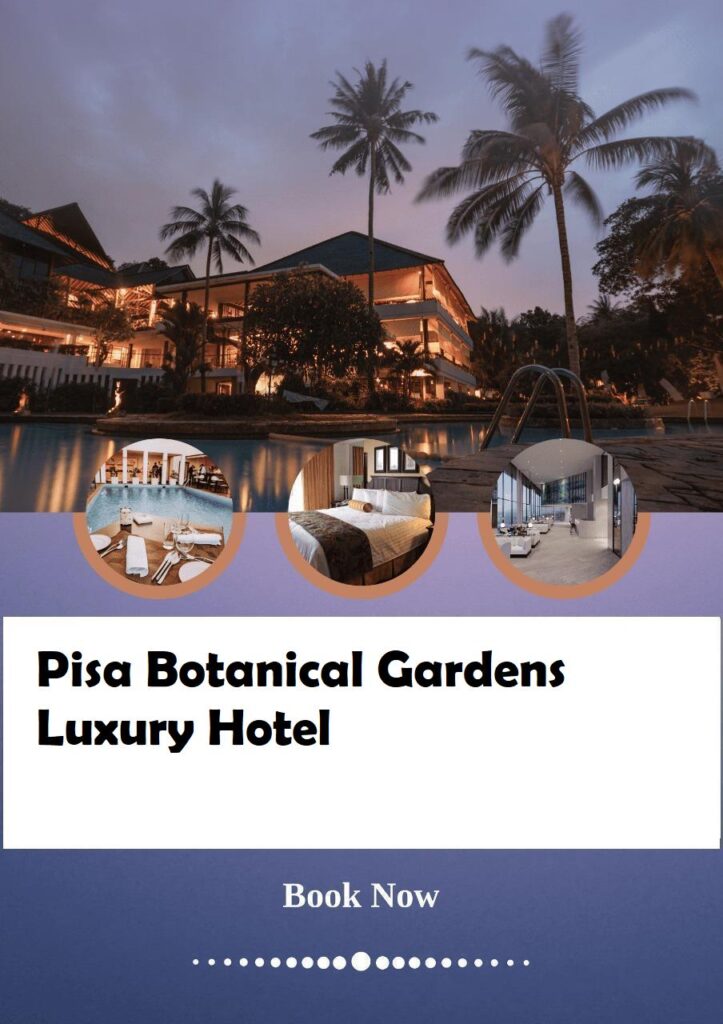
Tucked into Pisa’s historic heart, the Pisa Botanical Gardens Luxury Hotel beckons travelers who crave calm, character, and a quietly opulent sense of place. Imagine waking to birdsong and the citrus-sweet air drifting from centuries-old groves, then stepping through a discreet gate into a living tapestry of palms, camellias, and rare medicinal herbs. Here, luxury is not loud; it’s layered—hand-loomed linens, botanical scents blended in-house, and a rhythm of service that feels like the garden itself: measured, nourishing, and naturally restorative.
A Living-Green Concept
The hotel’s guiding theme is biophilic elegance—architecture that blurs the line between house and habitat. Sunlit corridors act as arboretums, with specimen planters and interpretive notes from the resident botanist. Lobby lounges are framed by glasshouse panels, filtering afternoon light into a soft, leaf-shadowed glow. Throughout, you’ll find a curated palette of Tuscan stone, terracotta, and pale oak, punctuated by living walls that bloom seasonally. The experience feels less like checking into a property and more like being invited into an ever-evolving greenhouse of comfort.
Suites Inspired by the Orto
Each suite is named for a plant family, and its design subtly reflects that lineage. The Citrus Grove Suites showcase hand-pressed lemon paper, citrus-wood accents, and balconies perfumed by potted bergamot. Camellia Residences bring hushed serenity with tea-stain textiles, shoji-style screens, and a soaking tub set beside a private fern atrium. In every room, considerately quiet luxuries abound: blackout drapery behind gauzy botanical sheers, a “pillow perfume” menu with essential-oil distillations, refillable amenity bottles crafted from recycled glass, and bedside herbariums that double as art.
Dining Among Fragrance and Flavor
Cuisine celebrates Tuscany through a botanical lens. Breakfast begins with garden honeys, rosemary-salted butter, and soft-baked breads. Lunch is light and luminous—grilled artichokes, farro salads with fennel, and citrus-dressed seafood from the Tyrrhenian coast. Evenings unfold in the Orangery Restaurant, where a tasting menu might pair saffron risotto with lemon-thyme oil, or herb-crusted lamb with a juniper jus. At the Gin & Green Bar, bartenders distill house gins with wild botanicals; a signature spritz infuses bergamot peel, bay leaf, and a whisper of camellia.
Spa & Slow Rituals
The Apothecary Spa designs treatments around the garden’s medicinal heritage—think rosemary-steam inhalations, sage-and-olive body polishes, and camellia-oil scalp rituals. Gentle wellness programming keeps time with the sun: dawn yoga under cypress, mid-afternoon breathwork amid lavender, and a stargazing soak scented with orange blossom. Guests can join the resident botanist for “twilight taxonomy,” a short wander through pathways when the garden is at its most aromatic, learning the stories behind the plants that shaped Tuscan healing and cuisine.
Culture at Your Doorstep
While the hotel is a sanctuary, its doorstep leads you straight into Pisa’s living history. Cobbled lanes, riverfront ambles, artisanal gelato, and the city’s famed architectural icons are an easy stroll away. The concierge crafts gentle itineraries—sketching plein-air in a quiet cloister, biking the river embankment at golden hour, or tasting small-batch olive oils with a local producer—so your days flow as naturally as the garden’s own cycles.
Q&A: Plan Your Stay
Who is this hotel ideal for?
Couples, design lovers, and culture-seekers who prefer intimacy over spectacle. Families are welcomed with nature-forward activities and discovery kits tailored to curious young travelers.
What makes it different from other luxury stays in Pisa?
True, thoughtful access to a historic garden, from private gates and guided walks to aromatherapy rituals drawn from living plant collections. The hotel weaves natural history into every touchpoint.
Are there sustainability initiatives?
Yes—solar-assisted hot water, rainwater harvesting for irrigation, native planting on terraces, and refillable amenities. Kitchen waste becomes compost for the garden’s non-heritage beds.
When is the best time to visit?
Spring brings blossoms and a bright, herbal fragrance; early autumn offers warm light and fewer crowds. Winter is serene and perfect for spa-centric escapes.
Is it family-friendly?
Absolutely. Request a seed-to-souvenir workshop, where children plant a small terracotta pot to take home, along with illustrated field cards.
How close is it to major sights?
You’re in the historic center, with renowned landmarks and river walks within easy reach, yet buffered by the calm of the garden.
Recommended Alternatives in and around Pisa
- Bagni di Pisa Palace & Thermal Spa – A grand, spa-forward retreat famed for therapeutic waters and regal ambience.
- Grand Hotel Duomo – Classic city stay with panoramic rooftop moments near the iconic sights.
- Relais dell’Orologio – Intimate townhouse charm, ideal for guests who love heritage textures and quiet courtyards.
- Hotel Bologna Pisa – Boutique comfort with warm hospitality and convenient access to central streets.
- NH Pisa – Practical, modern, and transport-friendly for quick city breaks or rail-linked itineraries.
Conclusion: An Exclusive Garden of Time
The Pisa Botanical Gardens Luxury Hotel offers the rarest commodity in a beloved city: unhurried elegance rooted in place. Your most exclusive experiences are quietly personal—slipping through a private gate at sunrise, breathing in citrus air as the city wakes; an herbal soak that seems to lengthen the evening; a candlelit dinner beneath glass, with constellations mirrored in polished cutlery and dew-glossed leaves. Here, luxury isn’t about excess; it’s about attention—each detail tuned to the gentle pulse of the garden, and to you.