The Spanish Steps are where Rome performs its most effortless theater: sunlight slides down travertine, café spoons chime, and the city’s fashion heart beats along Via dei Condotti. Rome Spanish Steps Grand Hotel distills that spectacle into a stay—an address where the dolce vita is not a memory but a daily rhythm. From dawn’s rose-gold glow on Trinità dei Monti to twilight aperitivi on a sweeping terrace, this is a grand hotel designed for those who want Rome at eye level, earshot, and fingertips.
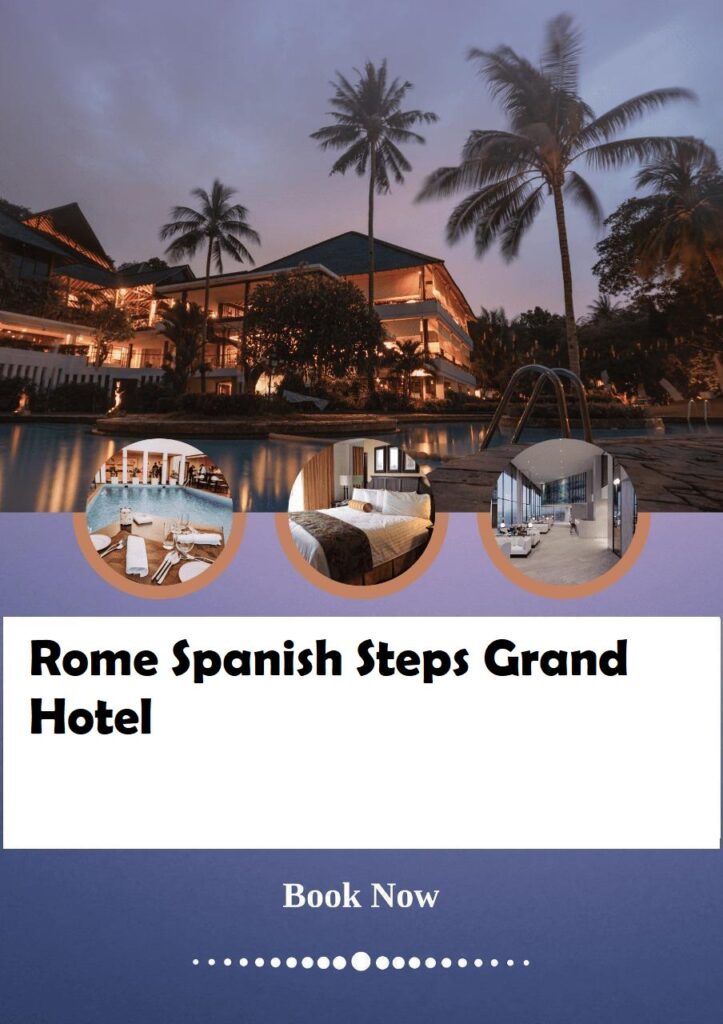
Timeless Heritage, Quietly Modern
Step into a lobby layered with Venetian plaster, cool marble, and soft Roman palettes—ecru, terracotta, and tea-rose. Classical lines anchor contemporary Italian design: bronze hardware, hand-loomed textiles, and sculptural lighting that traces arches as if sketching the city’s ruins in air. The mood is quietly glamorous, neither museum nor fashion set—just the Roman art of living, refined.
Suites for the View-Seeker
Guestrooms open to pocket balconies and Juliet railings, some gazing across tiled rooftops towards the Steps. Soundproofing hushes the bustle below; inside, you’ll find parquet floors, curated art prints, and beds dressed in airy linen. Marble bathrooms feature generous rain showers, deep soaking tubs, and amenities that smell faintly of citrus and cypress. In-room espresso stations, pillow menus, walk-in wardrobes, and thoughtful touches—like a leather catchall and silk hanger loops—make unpacking feel ceremonial. Families appreciate connecting plans; romantics chase the corner suites, where the light pools like honey in late afternoon.
Roman Gastronomy, Elevated
Mornings begin with a market-forward breakfast: flaky cornetti, wildflower honey, ricotta whipped with lemon zest, and seasonal fruit that tastes of sun. Lunch is a sprightly edit of Roman staples—crispy artichokes, cacio e pepe rolled at the table, sea bass with fennel and olive dust. Dinner leans modern: hand-cut tagliolini kissed with saffron, veal glazed in Marsala, sorbets perfumed with basil and fig. A resident sommelier plots pairings that drift from Lazio’s volcanic whites to Piedmont’s structured reds, and a private tasting room welcomes small parties for vertical flights and storytelling.
The Skyline Terrace
Take the lift up and you meet the city’s roofline face-to-face—domes, campanili, and pale stone flowing into the Pincian Hill. It’s a postcard come to life, especially at golden hour when the skyline blurs to watercolor. Aperitivi arrive on slender trays—olive ascolane, anchovy-butter crostini, citrus-bright spritzes. On summer nights, candlelight threads between planters of rosemary and laurel, and the city hums below like an orchestra warming up.
Wellness & Tailored Service
Downstairs, a boutique spa borrows Rome’s ancient bathing rituals: warm stone beds, herb-steam cabins, and a vitality pool edged in mosaic. Therapists blend Mediterranean botanicals—myrtle, thyme, bergamot—for treatments that feel both restorative and indulgent. The fitness studio runs 24/7 with smart equipment; personal training and riverside jog routes can be arranged. Concierge service is precise yet intuitive: expect last-minute tables, atelier visits, and museum entries slotted into the day with silk-glove ease.
The Neighborhood, Effortlessly Walkable
From the front door, the city unfolds on foot. The Keats-Shelley House sits a whisper from the Steps; Villa Borghese gardens are a leafy stroll away; the Trevi Fountain is a ten-minute wander past gelaterie and antique shops. Shoppers orbit Condotti’s couture. Art lovers slip into small galleries tucked between bespoke cobblers and perfumers. Rise early and the Steps are yours for a quiet moment, all pale stone and promise.
Q&A: Plan Your Stay
What makes Rome Spanish Steps Grand Hotel special?
Its triangulation of vantage, design, and discretion. You’re steps from Rome’s most iconic staircase, wrapped in interiors that elevate rather than overshadow, guided by a team that anticipates needs without hovering.
Who will love it most?
Style-focused couples, solo flâneurs, business travelers seeking a central address, and families who want the energy of the historic center with the hush of excellent soundproofing and connecting suites.
When is the best time to visit?
Spring (March–May) and early autumn (September–October) balance soft weather with lively streets. Summer thrums with festivals and long evenings; winter brings a calmer city and festive lights.
How convenient is the location for sightseeing?
The Spanish Steps are seconds away; Trevi Fountain about a 10–12 minute walk; Villa Borghese and its museums roughly 15 minutes; the Pantheon and Piazza Navona a pleasant stroll beyond.
What are good alternative hotels nearby?
- Hassler Roma – a Roman classic with storied service and a privileged perch above the Steps.
- Hotel de la Ville (Rocco Forte) – contemporary flair, panoramic terraces, and a lively bar scene.
- Portrait Roma – intimate all-suite hideaway with discreet luxury and fashion-house finesse.
- J.K. Place Roma – design-led, clubby atmosphere, meticulous details.
- Hotel de Russie – lush inner garden and polished hospitality near Piazza del Popolo.
Is it family-friendly?
Yes. Expect connecting options, cribs on request, kid-sized amenities, and concierge-curated walks (think: treasure-map routes to fountains and gelato stops).
Conclusion: The Privilege of Proximity
Rome Spanish Steps Grand Hotel is about privileged nearness—to beauty, to appetite, to the city’s daily theater. It lets you script singular moments: a sunrise stroll before the crowds, a private tasting with a vintner passing through town, a tailor’s atelier opened after hours, an evening on the terrace where domes turn to silhouettes and conversation slows. In a city that has perfected pleasure over millennia, the hotel offers a contemporary chapter—one written in soft light, fine textures, and the unmistakable cadence of Rome right outside your window.