Planning an African safari often stalls at one tricky decision: should you book a solid lodge with all the hotel comforts, or a tented camp that puts you right inside the sounds and smells of the bush? Many travelers compare photos online and still can’t tell what each stay type actually delivers day to day.
This safari lodge vs tented camp guide breaks down exactly what you get with each option. We’ll look at what lodges really offer, what tented camps feel like, how comfort and atmosphere compare, what you’ll pay across seasons, and how far ahead you need to book. We’ll finish with a simple way to match the stay type to your travel style, whether you’re traveling with kids, on a honeymoon, or chasing the best photography light. By the end, the right choice should feel obvious.
What a Safari Lodge Really Offers
A safari lodge is essentially a hotel in the bush. These are permanent structures built with solid walls, proper doors and windows, and reliable air conditioning, which matters more than you’d think after a hot morning game drive. Most lodges also have a swimming pool, and many are surprisingly large, often with 30-70 rooms spread across the property.
If you want hotel-style reliability, a lodge delivers it. You know the power will stay on, the shower will be hot, and the room will look the same when you return from dinner. That predictability is exactly why many first-time safari travelers choose lodges.
Built for longer stays
Lodges commonly offer facilities you’d expect at a resort: a spa, a gym, and several dining venues rather than a single restaurant. That variety makes a real difference on longer trips, so if you’re planning to stay four or more nights in one place, a lodge keeps things comfortable without feeling repetitive.
A strong pick for families
Families with young children often do better in lodges too. Many offer dedicated family rooms with extra beds, plus supervised kids’ programs that keep children entertained between game drives. Staff are used to early dinners, fussy eaters, and naps at odd hours. If that sounds like your household, a lodge removes a lot of logistical stress from your safari. Check each property’s family facilities before booking, as they vary widely.
What a Tented Camp Gets You
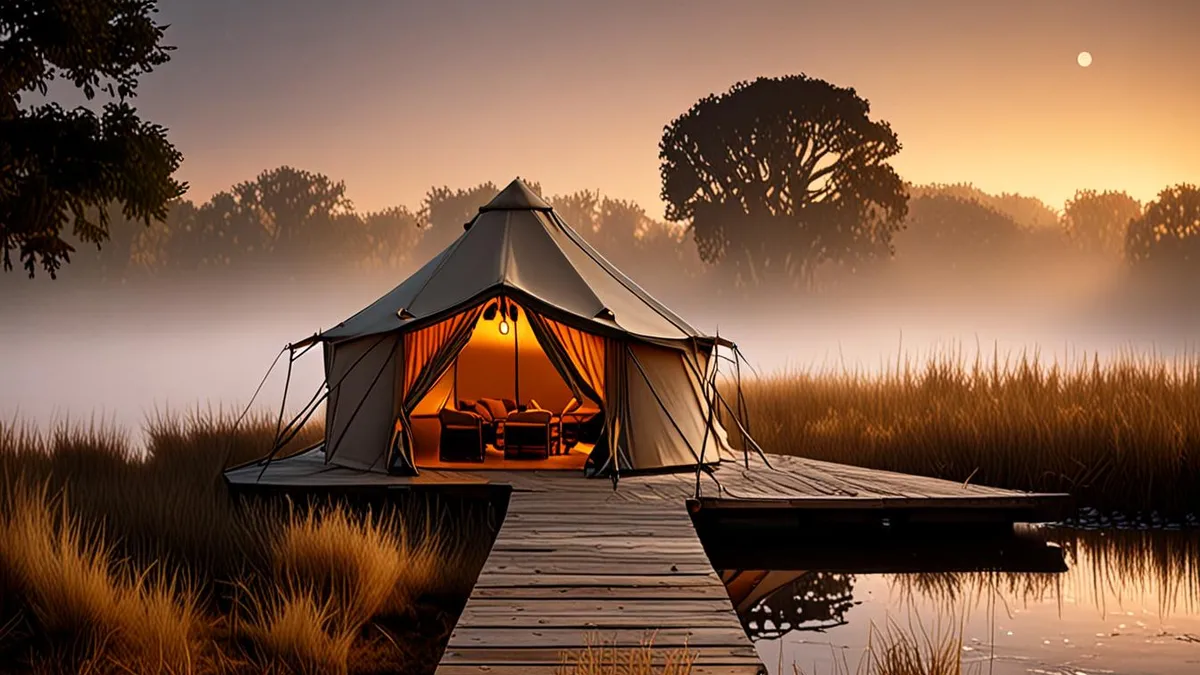
A tented camp is a different kind of safari stay. Instead of concrete walls, you get canvas suites stretched over wooden decks, usually just 8-12 tents in total. That small footprint creates a personal, bush-camp atmosphere where the staff know your name by day two and the manager often joins guests for dinner.
Because the numbers are small, everything feels more tailored. Guides ask what animals you most want to see, meals follow your preferences, and you’re rarely one of a large crowd jostling for a seat at the bar.
Sleeping inside the sounds of the bush
Canvas walls and open-air design change the experience completely. At night you hear hyenas calling in the distance, birds at first light, and sometimes hoofbeats or rustling just outside your tent. Falling asleep to the bush instead of to air conditioning hum is the reason many travelers pick a tented camp in the first place.
Camps that move with the wildlife
Many luxury tented camps are mobile or semi-permanent, shifting location seasonally to follow the animals. This is especially common along the Great Migration route, where camps reposition for the river crossings that typically occur from July to September. Staying in a moving camp puts you closer to the action than a fixed property can manage, which is a genuine advantage if wildlife density is your priority.
Safari Lodge vs Tented Camp: Comfort and Atmosphere Compared
On pure comfort, lodges win. You get dependable climate control, more reliable Wi-Fi, and more space to spread out, which matters on longer stays of 4+ nights. Tented camps win on immersion and intimacy, trading some polish for the feeling of actually living in the bush rather than just visiting it. Neither is objectively better; the right answer depends on what you value most after a long day of game viewing.
The comfort gap also depends heavily on budget level. At the budget end, tented camps typically mean bucket showers, shared bathrooms, or limited power hours for charging devices. But mid-range and luxury camps have closed that gap considerably in recent years, now offering en-suite bathrooms, proper beds on solid frames, hot running water, and often solar power around the clock. Many first-time visitors are genuinely surprised at how comfortable a high-end canvas suite feels.
Noise and privacy differ too. A lodge with dozens of rooms feels busier, with more guests around the pool and dining room. A small camp feels exclusive, but be aware that shared meals with all guests at one table are common, so you’ll spend mealtimes socializing whether you planned to or not. Some travelers love this; others would rather keep to themselves.
- Wi-Fi reality check: some lodges offer it in every room, while many small camps only provide a connection in the main lounge, if at all, so download maps and entertainment before arrival.
- Power for camera gear: luxury camps usually have charging points in each tent, but budget camps may restrict charging to a few hours in the mess tent, worth planning around if you carry multiple batteries.
- Staffing ratios: small camps often assign a personal waiter or butler per tent, while lodges run on a larger, more hotel-like service model.
- Dining style: lodges typically offer à la carte or buffet menus at set times, whereas camps often serve flexible, family-style meals around game drive schedules.
Costs and Value Across Seasons
Price is where the lodge versus tented camp decision gets interesting, because the gap between the two is smaller than most travelers expect. Mid-range safari lodges typically run $250-600 per person per night all-inclusive, covering your room, meals and the standard game drives. Luxury tented camps start around $600 and can easily exceed $1,500 per person per night, so at the top end, canvas can cost considerably more than a brick-and-mortar lodge.
Green season changes the math
The green season, running from November to March, often cuts rates by 30-50% compared with peak season. This is when luxury tented camps become far more attainable: a camp that feels out of reach in peak months may drop into the same price band as a mid-range lodge. You trade some predictability in weather and wildlife viewing for dramatic landscapes, newborn animals and a fraction of the crowds.
Peak season, from June to October, commands top prices at both stay types. During these months, a small luxury camp and a high-end lodge can cost similar amounts per night, so your choice matters more for value and experience than for wildlife quality. The animals are equally active whether you sleep under canvas or behind solid walls.
A practical approach: if you want a tented camp experience but balk at peak-season rates, consider traveling in the green season instead of downgrading to a cheaper lodge. Rates and inclusions vary by property and operator, so always confirm what the nightly price covers before booking.
Booking Lead Times and Logistics
Timing your booking matters almost as much as choosing between a lodge and a tented camp. The two stay types sell out on very different schedules: small camps have only a handful of tents to sell each night, so the best-positioned units disappear first, while lodges with dozens of rooms have far more flexibility and can usually absorb a late booking. Here is a practical sequence for getting it right.
- Choose your season first. Everything else flows from this decision. If you want the peak window from June to October, start planning 9-12 months ahead. Green season trips from November to March usually need only 3-6 months of lead time, and you may also find better availability at the camps that are fully booked in peak months.
- Book small tented camps earliest. With just 8-12 tents, a single popular week can sell out an entire camp, so confirm your dates as soon as flights become bookable rather than waiting for a better deal that may never appear.
- Check the light aircraft transfer details. Remote camps are typically reached by small planes that enforce baggage limits of about 15 kg per person, packed in soft bags without wheels or hard frames.
- Pack down accordingly. Duffel bags beat suitcases here. Anything oversized may travel on a later flight or incur extra fees, so confirm your operator’s rules before you fly.
- Confirm the daily rhythm. Both stay types typically include two game drives daily, roughly 3-4 hours each at dawn and late afternoon, with meals and downtime in between. Knowing this helps you plan arrival and departure days realistically.
Once these steps are done, most of the logistics fall into place on their own. Camps and lodges usually coordinate arrival times around scheduled light aircraft flights, so let your operator align your transfer bookings with your accommodation before you lock in anything else. Getting this order right saves money, stress and disappointment.
Which Stay Type Fits Your Travel Style
The right choice comes down to how you like to travel, not which option is objectively better. A lodge and a tented camp can sit ten minutes apart in the same reserve and deliver completely different experiences. Think honestly about what you want when you return from a long, dusty morning drive.
If your answer involves a cold drink by a pool, a reliable air-conditioned room and space for the kids to run around, a lodge is the natural fit. If your answer involves falling asleep to lions calling in the distance and hearing every bird at first light through canvas, a tented camp will feel worth every compromise.
- Honeymooners: small camps often offer private dinners on your deck, outdoor bucket showers under the stars and staff-to-guest ratios that make celebrations feel personal.
- Photographers: camps near migration routes or waterholes let you be first out at dawn, and some offer specialized photographic vehicles or hides worth asking about.
- Multigenerational groups: lodges handle grandparents and toddlers more gracefully, with family rooms, kids’ programs, shaded pools and multiple dining options that keep everyone on their own schedule.
- Solo travelers: the communal dinners common at small camps make it easy to meet fellow guests, while lodges suit those who prefer anonymity.
Be honest about your tolerance for nature indoors, too. If a frog on the wall or a genet padding through the dining area would ruin your evening, choose solid walls. If those moments are exactly why you came, canvas is calling.
The Bottom Line on Safari Stays
So, lodge or tented camp? If you want hotel-style comfort, family facilities and a pool between game drives, a lodge is the safer bet. If you’d rather hear lions calling from your canvas room and share dinner with a handful of fellow guests, a tented camp delivers that intimacy no big property can match.
Budget and season shape the decision too. Green season rates often drop 30-50% versus peak, which can put a luxury tented camp within reach, while peak-season trips from June to October reward early planning. Match the stay type to your travel style, book small camps well ahead for peak dates, and either choice will give you an unforgettable safari. Which would you pick? Tell us in the comments or share this article with a friend planning their own trip.