You want to wake up steps from Utah’s famous red rock parks without giving up comfort, but sorting out which areas and stay types actually deliver can feel overwhelming. Glamping in Utah has exploded in recent years, and the options near Zion, Arches, Canyonlands, Bryce Canyon and Capitol Reef now range from simple canvas tents to glass domes with stargazing views from bed. Not all of them live up to the photos, though.
This guide breaks down the decisions that matter: why a glamping site often beats a standard hotel room, which areas work best for each park, and how tents, domes, wagons and cabins compare on price and comfort. You’ll also find advice on timing your trip, spotting a genuinely great desert site before you book, and pairing parks so you see more without spending your whole vacation driving. Let’s get into it.
Why Glamping in Utah’s National Park Country Beats a Standard Hotel
The biggest difference between a glamping site and a hotel room is what greets you when you step outside. At a glamping property, your deck often sits in open desert with almost no light pollution, so you can watch the Milky Way from a lounge chair instead of squinting up from a hotel parking lot between parked cars. Utah’s national park country has some of the darkest night skies in the country, and a well-placed tent or dome puts you right under them.
Location you can’t get from a gateway town
Hotels in towns like Springdale or Moab put you near the parks, but glamping sites can sit dramatically closer to the entrances themselves. When your accommodation is 20 minutes from the gate instead of an hour, you can catch sunrise in the park and still get back for coffee. That kind of proximity simply isn’t available in a standard room inventory.
The design side matters too. Many of these properties are built specifically for red rock settings, with desert-modern touches like wood stoves for chilly nights, outdoor showers under open sky, and plunge tubs positioned for canyon views. It’s a style of accommodation that feels like it belongs to the landscape rather than fighting it.
The Best Areas for Glamping in Utah, Park by Park
Utah’s national park country covers a lot of ground, and the right glamping base depends on which parks you care about most. Each area has its own personality, weather pattern and range of properties, so it pays to match the location to your trip rather than booking blindly.
Zion and Moab lead the pack
The Zion area, including spots near Springdale and out toward Hurricane, puts you under dramatic canyon walls that glow at sunset. Spring and fall weather here tends to be the mildest in the state’s park country, which makes it a comfortable choice for canvas accommodations. Moab, on the other hand, is the practical base for both Arches and Canyonlands, and it offers the widest selection of dome and tent properties anywhere in Utah. If you want options, this is where you’ll find them.
Quieter corners worth considering
- Boulder-Escalante: a small, laid-back community along scenic Highway 12 that works well for exploring the less-visited sections of Grand Staircase-Escalante National Monument, with slot canyons and trailheads reachable without passing through any park entrance station.
- Torrey: the closest town to Capitol Reef, where glamping sites sit at slightly higher elevation and the surrounding orchards and historic fruit stands give you something to do between hikes.
- Bryce high country: sits at high elevation among ponderosa pine forest, so instead of open desert you get cooler nights, tree cover and a genuinely different feel from the red rock areas to the west.
If crowds are your main concern, the Boulder-Escalante and Torrey areas deliver the quietest experience. Bryce high country suits travelers who run hot or want a forest setting. Zion and Moab remain the best picks for first-timers who want drama and choice.
Stay Types Compared: Tents, Domes, Wagons and Cabins
Not all glamping is the same, and the stay type you pick shapes both your budget and your comfort. Here’s how the main options compare across Utah’s park country.
Canvas safari tents
The classic choice, and usually the most affordable. These large tents on platforms typically run around $150-250 per night and work best in the mild months, when canvas breathes comfortably and you don’t need serious climate control. Expect real beds and furniture inside, but remember that canvas is still canvas when the wind picks up.
Geodesic and glass domes
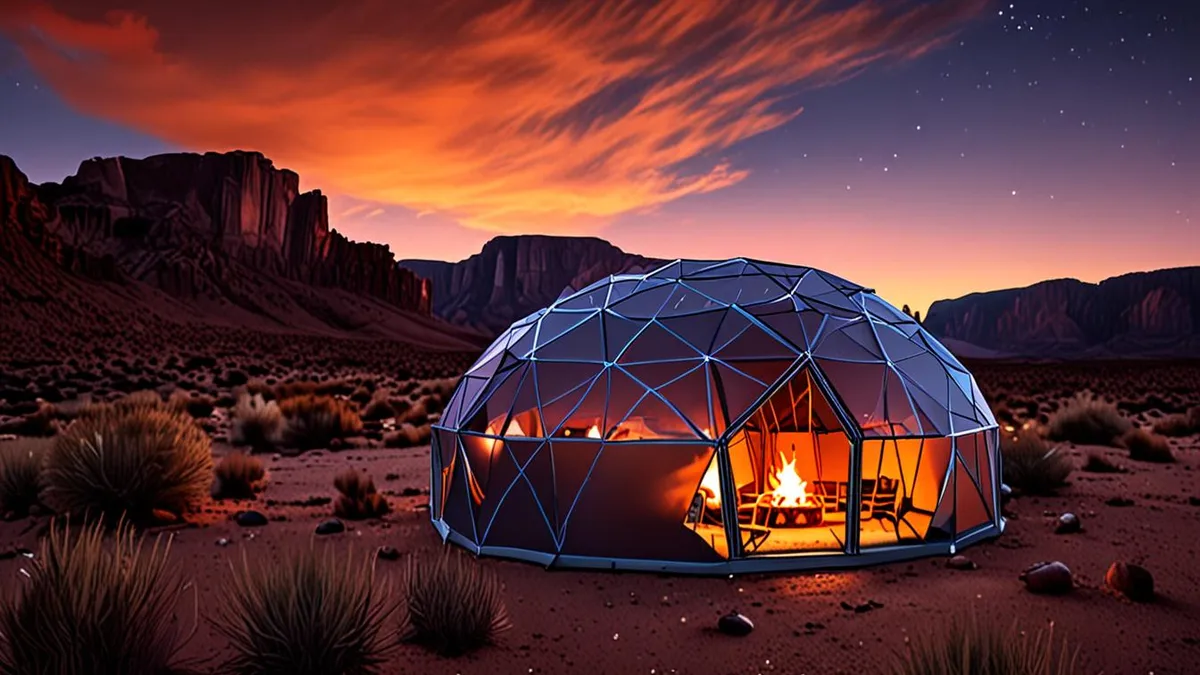
Domes are the splurge tier, generally $250-400+ per night. The appeal is obvious: a clear or windowed ceiling lets you stargaze from bed, and the rigid structure handles weather better than fabric. Many come with heating, solid flooring and more substantial bathrooms.
Wagons and A-frame cabins
Covered wagons and A-frames hit a nice middle ground. They cost less than most domes, feel more enclosed than a tent, and suit families who need a bit more space or travelers visiting in cooler shoulder-season nights.
- Wagons: often arranged in small clusters with shared fire pits, which makes them a social, kid-friendly option where children can run between neighboring wagons under supervision.
- A-frame cabins: usually have solid walls, a proper door and a small covered porch, so they handle wind and dust far better than canvas and feel closer to a tiny-home stay.
- Family fit: both types frequently sleep four or more, something many safari tents and single domes can’t manage, so check occupancy carefully if you’re traveling with kids.
Whichever type you choose, confirm what’s included before booking, since bathroom setups and heating vary a lot between properties at the same price point.
When to Book: Seasons, Weather and Lead Times
Timing makes or breaks a desert glamping trip. The sweet spot runs from mid-March to May and again from September to early November, when daytime temperatures typically sit in a comfortable 60-85°F range. That’s the window when outdoor showers, plunge tubs and deck stargazing actually feel pleasant instead of punishing.
Why summer is a different trip entirely
From July through August, highs near Zion and Arches regularly spike past 95°F. Canvas tents and domes heat up fast, and midday hikes become unsafe rather than just uncomfortable. If summer is your only option, plan park visits for dawn and dusk and treat the middle of the day as pool, shade or nap time. Some travelers do this happily — but go in knowing that’s the deal.
Winter is the opposite trade-off. Availability is much easier to find and rates tend to soften, but nighttime temperatures can drop below 45°F even in the shoulder seasons, and winter nights are colder still. A site with a wood stove changes the math here, so read listings carefully before booking a cold-season stay.
For spring and fall weekends, book 3-6 months ahead. The best-positioned sites near Zion and Moab fill first, especially around school holidays. Midweek stays in the same window are noticeably easier to land if your schedule allows.
How to Spot a Genuinely Great Desert Glamping Site
Glamping listings love words like “steps from the parks,” but the map tells the truth. Before booking, plug the property’s actual location into a mapping app and check the drive to the park entrance yourself. In Moab, for example, sites range roughly 30-45 minutes from the Arches entrance — a real difference when you’re trying to arrive before the crowds. A site 45 minutes out is still a fine base, but you should know that going in, not discover it at 6 a.m.
Desert weather swings hard in the other direction too. Daytime highs can plunge 25-30 degrees once the sun sets, so heating matters as much as cooling. Climate control or a wood stove isn’t a luxury in a canvas structure; it’s the difference between a cozy night and a shivering one.
- Real beds, not cots: a proper mattress on a frame matters more in a tent than in a hotel, since canvas floors amplify every draft and every lumpy sleeping pad.
- Private bathrooms: shared bathhouses can work, but after a dusty trail day, an en-suite bathroom is worth filtering for specifically.
- Dark-sky setting: sites well outside gateway towns get dramatically better stargazing than ones lit by town glow — check whether the listing mentions light pollution or offers a telescope or stargazing deck.
Finally, read recent reviews with wind and dust in mind. Canvas tents and domes are the structures most affected by gusts and fine red dust, and reviewers will tell you honestly whether flaps rattle all night or dust sneaks through seams. A few recent mentions of either is a signal to look elsewhere.
Building Your Trip: Pairing Parks With Your Glamping Base
Utah’s national parks sit close enough together that one well-chosen glamping base can cover more than one park. The trick is matching your base to the pairing you actually want, because drive times — not distances — are what shape your days.
The most popular combination is Zion plus Bryce Canyon. From a glamping site near Zion or Springdale, Bryce is about a 1.5-2 hour drive (72-85 miles), which makes a full day trip entirely reasonable. You leave after an early breakfast, spend the day among the hoodoos, and still get back to your tent or dome for dinner and stargazing. Two iconic parks, one unpacked bag.
Moab works differently: it’s a split-day base rather than a day-trip base. Because both Arches and Canyonlands entrances sit within easy reach of town, you can hike Delicate Arch in the cool morning light and be watching the sunset over Canyonlands’ Island in the Sky district the same evening. Check the exact drive time for any specific property before you book, since sites on the outskirts can add meaningful minutes to an early start.
- Capitol Reef as the quiet add-on: a glamping base near Torrey puts you at one of the least crowded parks in the system, ideal if you want orchards, scenic drives and empty trails rather than shuttle lines.
- The road-trip link: Torrey sits naturally between Zion and Moab, so you can string together a multi-base itinerary — a few nights near Zion, a night or two in Torrey, then on to Moab — without long backtracking.
- Pace your days: pair one demanding hike with one scenic drive per day, since heat and elevation add up faster in the desert than most visitors expect.
Planning Your Utah Glamping Trip
Glamping solves the problem most Utah trips run into: you want to wake up close to the red rock, not an hour away in a motel parking lot. Utah’s National Park country offers glamping near Zion, Moab, Bryce and Capitol Reef, so you can pick a base that matches the parks on your list and still sleep in a real bed with a wood stove and a dark sky overhead.
Two decisions matter more than any single property name. First, choose the right area — Moab for Arches and Canyonlands, Zion country for canyon scenery, Torrey or Boulder-Escalante for quieter trails. Second, match the stay type to the season and your group. Spring and fall are the prime windows, with bookings made 3-6 months ahead for the best weekend slots. If this helped you plan your trip, leave a comment or share the article with a fellow traveler.