Many travelers love the idea of waking up to elephants grazing outside their window, but they hesitate at the word “tent.” Will there be a real bed? A hot shower? Or does glamping secretly mean cold water, thin mattresses and a flashlight for a bathroom trip at midnight?
The good news is that a genuine luxury safari tent delivers far more comfort than most people expect, often rivaling a five-star hotel room while sitting in the middle of the bush. In this article, we break down exactly what a stay includes at a glance, what you’ll find inside the tent, how bathrooms and power actually work, what the dining and activities cover, what it typically costs and when to book, and how to choose the right tent for your trip. By the end, you’ll know whether canvas-and-canvas luxury fits your next safari.
What a Luxury Safari Tent Stay Includes at a Glance
A modern luxury safari tent is closer to a private suite than a camping tent. These structures typically span 50-100 square meters including the deck, which means you get distinct zones for sleeping, lounging and soaking up the view rather than one cramped room. Most camps position tents well apart from each other, so you hear birds and distant wildlife instead of your neighbors. Canvas walls and mesh screens let the sounds of the bush in while keeping insects out, and the canvas itself softens light in a way no hotel room can replicate.
The second thing that surprises first-time safari guests is the all-inclusive pricing model. Rather than paying separately for every meal, drink and game drive, most high-end camps bundle the essentials into one nightly rate. That rate generally ranges from $300 to $1,500 per person per night, depending on the camp, its location and the season. Here’s what that usually covers:
- Spacious sleeping and living areas: a proper king bed (often convertible to twin), a lounge corner with sofas or armchairs, and a private deck with lounge chairs facing the bush.
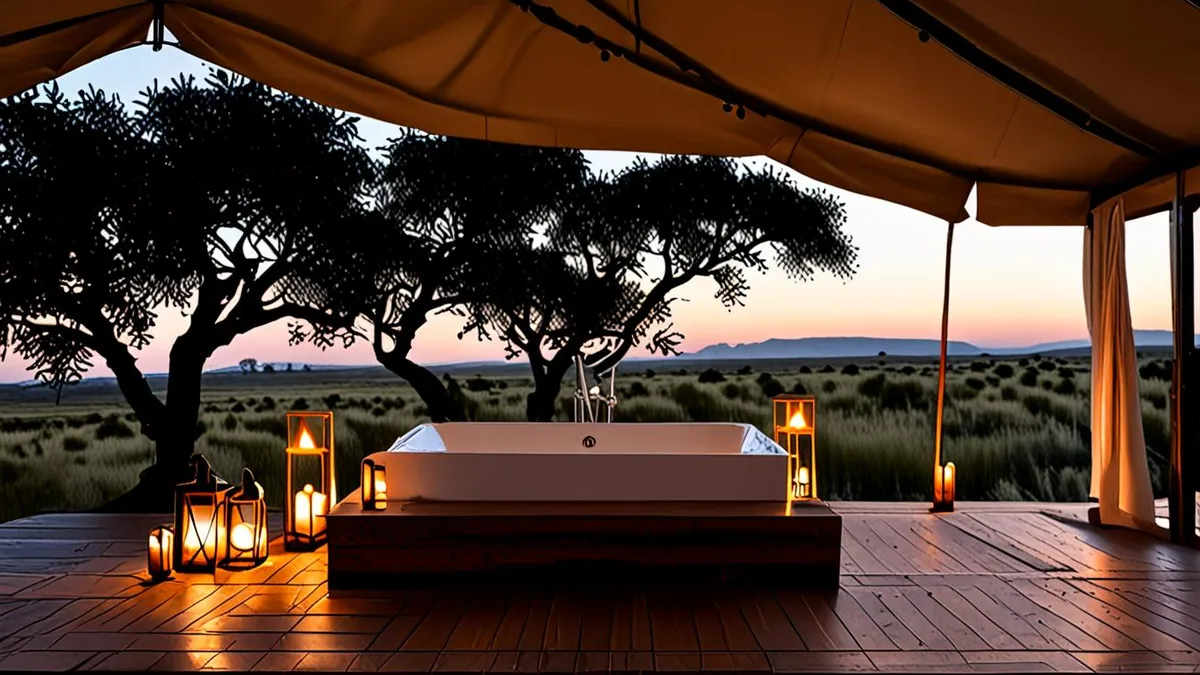
- Full ensuite bathrooms: flush toilets and hot rain showers come standard, and many tents add a freestanding tub positioned by a window or on the deck for a view while you bathe.
- All-inclusive rates: meals, house drinks and two guided activities per day are typically included, so game drives and sundowners don’t generate a surprise bill at checkout.
Keep in mind that exact inclusions vary between camps and operators, so it’s always smart to confirm what your specific rate covers before you book. Ask your operator or the camp directly about anything that matters to you, from premium drinks to private vehicles, and get the answer in writing. A short email before you pay your deposit can prevent misunderstandings later, especially at smaller camps where policies differ from the big-name lodges. Once that’s sorted, all that’s left is to arrive, unzip the canvas and let the bush do the rest.
Inside the Tent: Furnishings, Beds and Amenities
Step inside a high-end safari tent and the first thing you’ll notice is the bed. Camps outfit tents with proper king or twin beds dressed in linen bedding, topped with a mosquito-net canopy that adds romance without feeling fussy. Blackout canvas panels let you sleep past sunrise if you want, even though most guests set an alarm to catch the morning game drive.
Beyond the bed, the standard amenities read like a city hotel checklist. You’ll typically find a writing desk, an in-room safe for passports and valuables, charging stations for cameras and devices, and solar-powered lighting that keeps the tent softly lit after dark. Many camps add extras such as binoculars, a coffee station and a small reference library of local wildlife guides.
Housekeeping and daily service
Most luxury tented camps include daily housekeeping, so your tent is refreshed while you’re out on game drives. Laundry service is standard in the majority of high-end camps, which is a genuine relief on longer trips where packing light matters. In the evening, turn-down treats, a hot water bottle tucked into the bed or a short handwritten note about tomorrow’s sightings are common touches that make the stay feel personal. If laundry or a specific service matters to your trip, confirm it with your camp when booking, as details can vary.
Bathrooms, Power and Hot Water in the Wild
The bucket-shower cliché belongs to budget camping, not to the luxury tier. High-end safari tents come with full ensuite bathrooms that offer 24-hour hot water, dual vanities and often both an indoor rain shower and an outdoor shower under the trees. Plumbing is real plumbing: flush toilets, proper drainage and reliable water pressure are the norm, not the exception.
Power works the same quiet miracle. Solar arrays paired with generator backup keep the lights, ceiling fans and Wi-Fi running throughout the day, so you can charge camera batteries overnight and post a few photos from the deck without drama. Camps are typically built with these systems from the ground up, which is why comfort doesn’t waver even in remote locations hours from the nearest town.
Toiletries and comforts
Expect the small luxuries you’d find in a good hotel: hair dryers, plush robes and premium toiletries are standard, along with plenty of towels for both indoor and outdoor showers. If creature comforts in remote places are what draw you, you may also enjoy reading about secret luxury retreats that deliver premium guest comfort in unexpected corners of the world. As always, amenities differ slightly between camps, so ask your operator for the exact list if a particular comfort matters to you.
Dining, Drinks and Included Activities
Food is a genuine highlight of a luxury safari tent stay. Camps employ trained chefs who prepare three meals a day, from early-morning coffee and a cooked breakfast to a three-course dinner. Breakfast is usually served in the main mess tent before your first game drive, while dinner might be a seated affair with plated courses or a barbecue around the fire.
Location changes the experience night to night. Many camps move meals outdoors when conditions allow, so you might eat lunch on the deck watching a waterhole, then have dinner under the stars with lanterns and a crackling campfire nearby. Bush dinners are a signature moment, and camps typically arrange them several times a week rather than every night.
Drinks follow a simple rule in most all-inclusive camps: the house selection is included, and anything premium is billed to your room. If you care about wine or specific spirits, ask the camp for its drink list before booking, or consider bringing a favorite bottle if the camp permits it.
Activities are bundled into the rate at most high-end camps, generally two per day led by qualified guides. These are typically shared experiences, meaning you join other guests in the same vehicle, though many camps offer private vehicles for an extra fee.
- Morning game drives usually depart before sunrise, with a hot drink stop mid-drive and wildlife at its most active in the cool early hours.
- Afternoon drives often run into the evening, giving you a chance to spot nocturnal animals with a spotlight on the way back to camp.
- Guided bush walks are offered at many camps, focusing on tracks, plants and smaller creatures you simply cannot notice from a vehicle.
- Sundowner stops are a beloved ritual, where the guide picks a scenic spot so you can enjoy a drink as the sun goes down.
How Much a Luxury Safari Tent Costs and When to Book
Luxury safari tents are priced per person per night, and the spread is wide. Expect roughly $300 to $1,500 per person per night depending on the camp, its location and the season. A tented camp in a private concession with butler service sits at the top of that range, while a well-run camp just outside a major reserve can come in far lower without sacrificing comfort.
Season is the biggest lever on price. The dry months of June to October are the best for game viewing, and they command the highest rates, sometimes nearly double what the same tent costs in the rainy season. If your dates are flexible, traveling in the shoulder weeks at either end of the dry season can soften the bill while still offering good wildlife viewing.
When to Book
For peak-season travel in July through September, reserve 9 to 12 months ahead. The best-located tents and the most sought-after camps sell out first, and last-minute availability in those months is rare. If you are targeting the green season, booking 3 to 6 months ahead is usually enough, and you may even find discounted rates or stay-longer deals.
Before you commit, confirm exactly what the rate includes. Most luxury tented camps bundle meals, drinks and two daily activities, but park or conservation fees are typically billed separately, and those fees change regularly, so check the current amounts with your operator.
Choosing the Right Luxury Safari Tent for Your Trip
The first decision is who is traveling. Standard luxury tents are designed for couples or solo travelers, with a king bed or twin configuration, and most comfortably sleep 2 to 4 guests. Family tents are larger, often with two or three separate bedrooms and a shared lounge, and can accommodate up to 6 guests. If you are traveling with teenagers or grandparents, ask specifically about interconnecting tents, which keep everyone close without sharing a bathroom.
Beyond the basics, camps offer upgrades that can transform the stay. Some are standard at the top end of the market and optional extras elsewhere, so it pays to compare what each camp includes in its base rate before paying more.
- Private plunge pools on the deck give you a cool-down spot between drives and a front-row seat to animals passing by in the heat of the day.
- Star beds let you sleep on a raised platform under the open sky, usually as a one-night experience arranged by the camp rather than your default bed.
- Butler service means a dedicated staff member handles your meals, laundry and daily schedule, a genuine advantage on early-morning drive departures.
- Private vehicles and guides let you set your own schedule and linger at a sighting instead of following a shared itinerary, usually for an additional fee.
Finally, location within the camp matters more than most travelers expect. Riverfront tents and those facing a busy waterhole book out first, sometimes many months ahead of other rooms in the same camp. When you reserve, ask which specific tent numbers face the water and request one by name, especially for the June to October dry season when wildlife congregates around remaining water sources.
The Bottom Line on Your Luxury Safari Tent Stay
A luxury safari tent is not a compromise—it’s a full hotel experience under canvas. King beds, hot showers, chef-prepared meals and guided game drives all come as standard, so you trade nothing in comfort and gain the sounds of the bush right outside your door. Glamping here means roughing it only in the sense that your morning coffee comes with a view of the savanna instead of a parking lot.
Budget roughly $300 to $1,500 per person per night, with most high-end camps bundling meals, house drinks and daily activities into an all-inclusive rate. If you’re set on the dry months of June to October, booking 9 to 12 months ahead gives you the widest choice of tents. Have you stayed in a luxury safari tent, or are you planning your first trip? Leave a comment below or share this article with a fellow traveler.